
Sign in
If you do not have an account, click Create AccountCreate Account
Some items are no longer available. Your cart has been updated.
This discount code cannot be used in conjunction with other promotional or discounted offer.
For more than a century, soccer prided itself on its fluidity. A single referee, two assistants, and the occasional glance at a sideline clock—that was the extent of the officiating. Goals were celebrated or mourned in real time, and human error was simply accepted as part of the game’s charm.
Then came VAR.
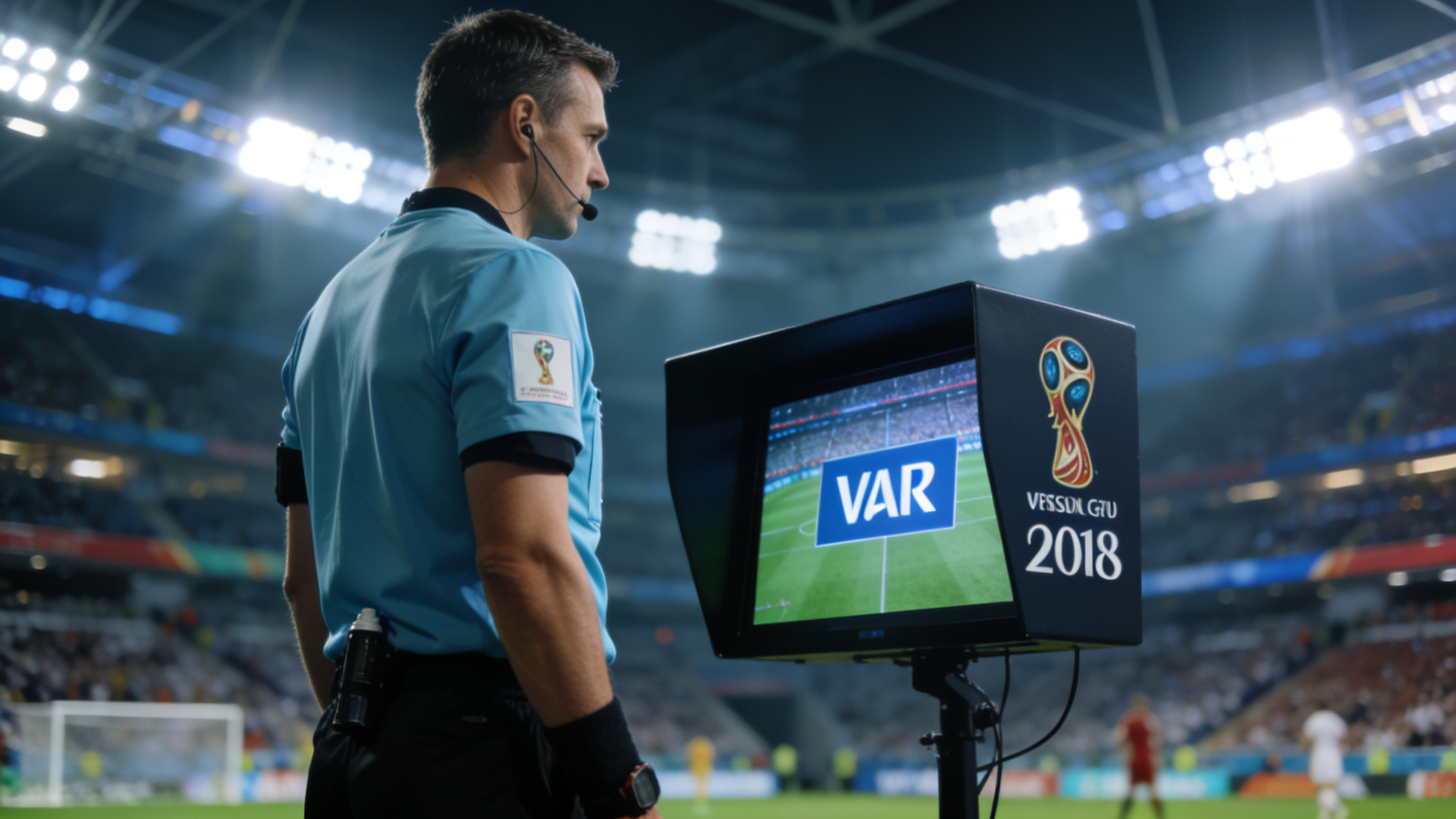
Introduced at the 2018 World Cup in Russia and refined dramatically in 2022, the Video Assistant Referee system has fundamentally altered how the World Cup is played, officiated, and experienced. Love it or hate it, VAR is here to stay—and its influence on the tournament has been nothing short of revolutionary.
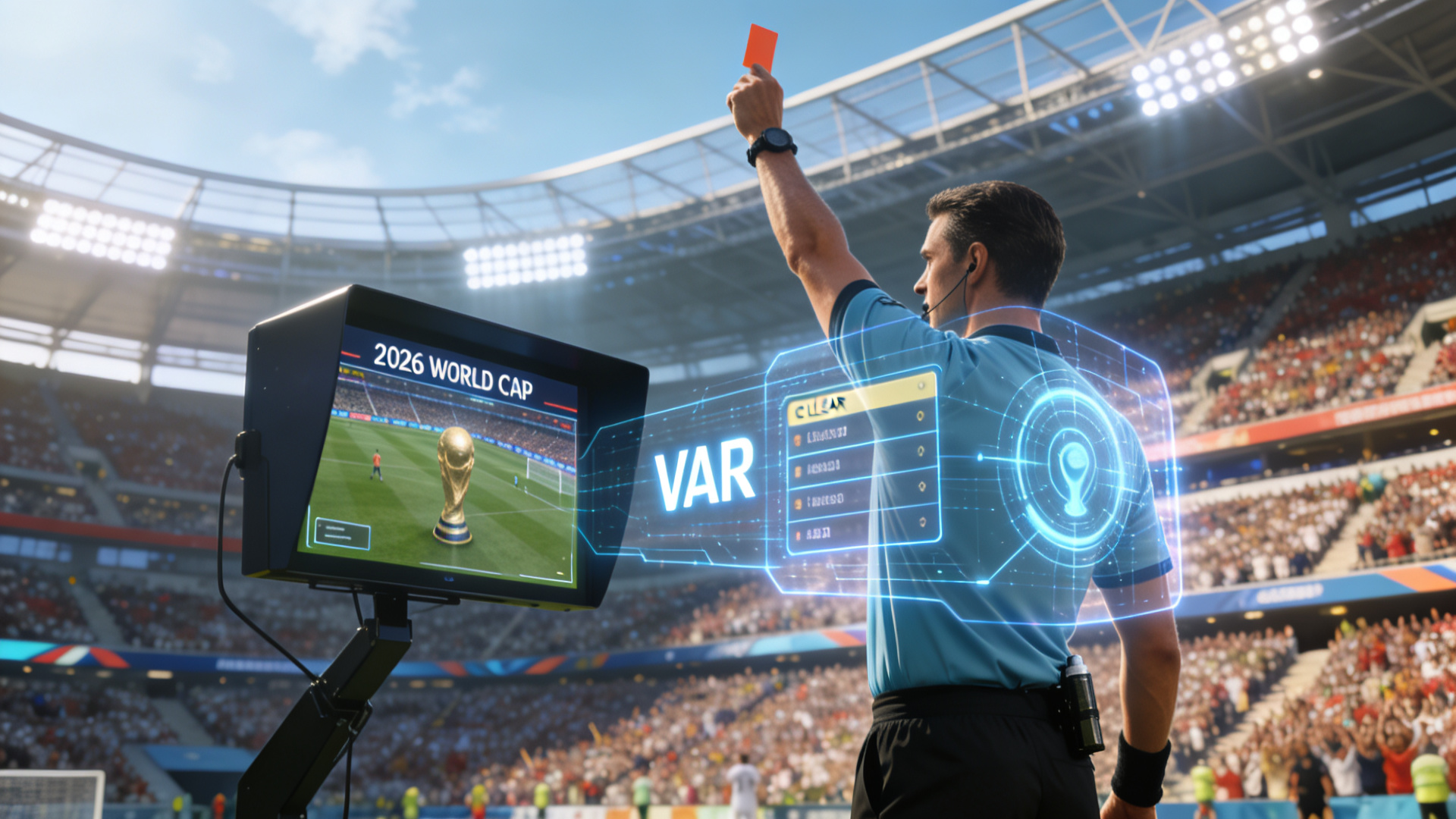
In this post, we’ll explore how VAR changed the World Cup forever, from its rocky debut to its controversial maturity, and what its role will be in the 2026 tournament.
FIFA had experimented with video review at the 2017 Confederations Cup, but the 2018 World Cup marked the global stage debut of VAR. The mandate was clear: correct “clear and obvious errors” in four match‑changing situations—goals, penalties, direct red cards, and mistaken identity.
The rollout was anything but smooth.
In the group stage, France’s Antoine Griezmann was awarded a penalty after VAR detected a soft push in the box against Australia—the first World Cup penalty awarded via video review. Later, Portugal’s Cristiano Ronaldo saw a penalty he won controversially upheld after a lengthy check. Fans in stadiums were often left in the dark, watching players wait for minutes while referees consulted monitors at the side of the pitch.
By the final, where France defeated Croatia 4–2, VAR had been used 20 times, influencing 14 decisions. It had already changed the tournament, but the real evolution was yet to come.
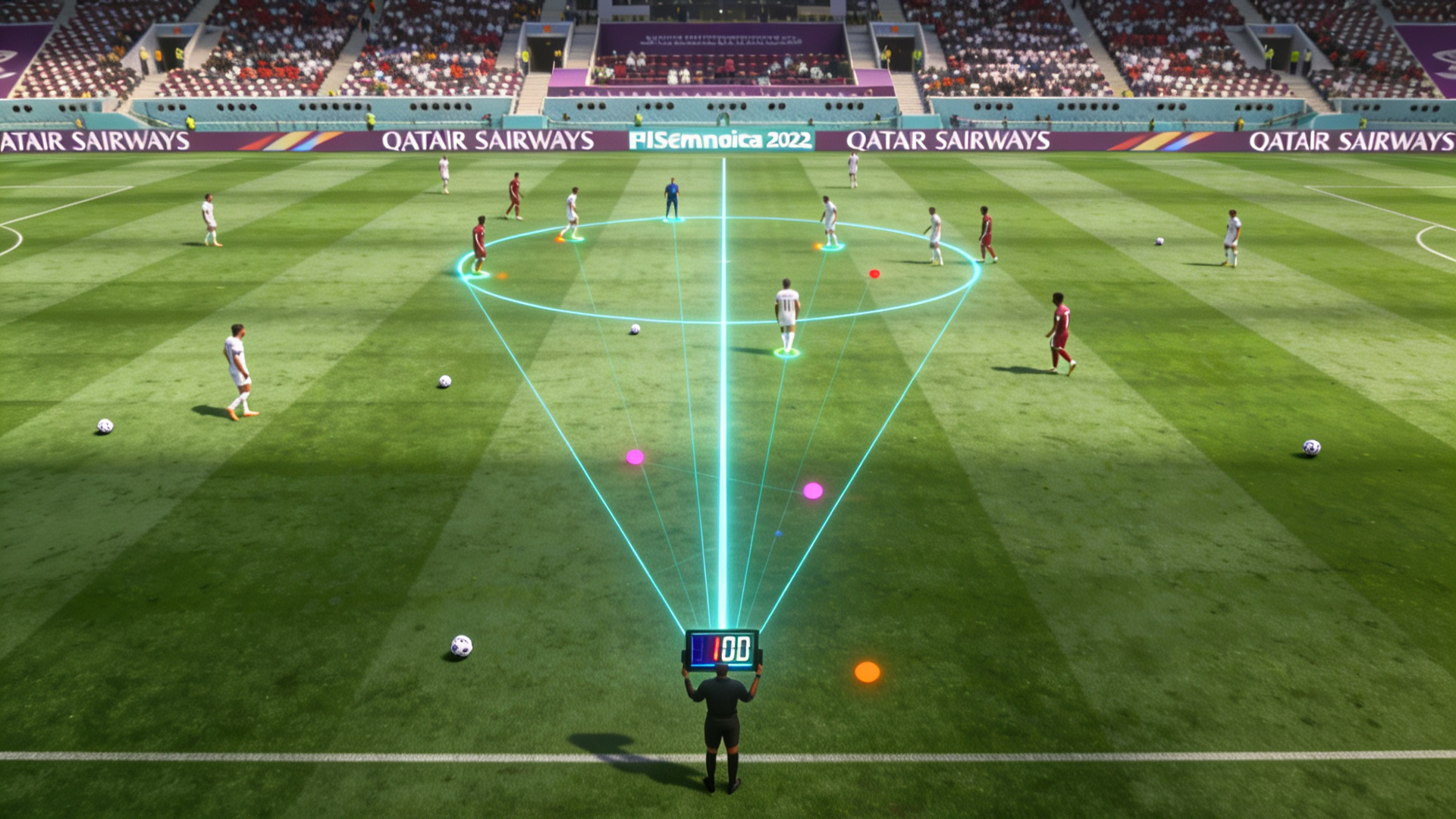
By Qatar 2022, VAR had matured. FIFA introduced semi‑automated offside technology (SAOT)—a system using 12 tracking cameras and AI to generate instant 3D offside lines. This reduced the average offside review time from 70 seconds to just 25 seconds. The era of the fuzzy hand‑drawn line was over.
But the biggest change was psychological. Players and coaches began to understand that any controversial moment could be scrutinized. Celebrations were often muted until the referee signaled the goal stood. Penalty appeals became more theatrical, and the phrase “check complete” entered the soccer lexicon.
VAR in 2022 delivered several pivotal moments:
Argentina’s opening loss to Saudi Arabia: Three first‑half Argentina goals were ruled offside by SAOT, each by millimeters. While the decisions were technically correct, they highlighted how VAR could reshape a match’s narrative.
Japan’s millimeter goal against Spain: The ball appeared to go out of play before a Japanese player crossed for the winning goal. VAR showed it had curved—by 1.88 millimeters—staying in. Japan advanced at Germany’s expense.
Croatia vs. Brazil quarterfinal: VAR correctly overturned a late penalty for Brazil, preserving Croatia’s chance to force extra time. Croatia won on penalties.
The final’s penalty calls: Argentina’s first goal came from a soft penalty awarded after VAR review. Later, a French penalty was upheld for a handball. Both decisions sparked intense debate.
By the end of the tournament, VAR had been consulted 47 times, leading to 23 “on‑field reviews” where referees changed their original call. The accuracy of key match decisions reportedly rose from 95% to 99%—but the controversy around how and when VAR intervened only intensified.
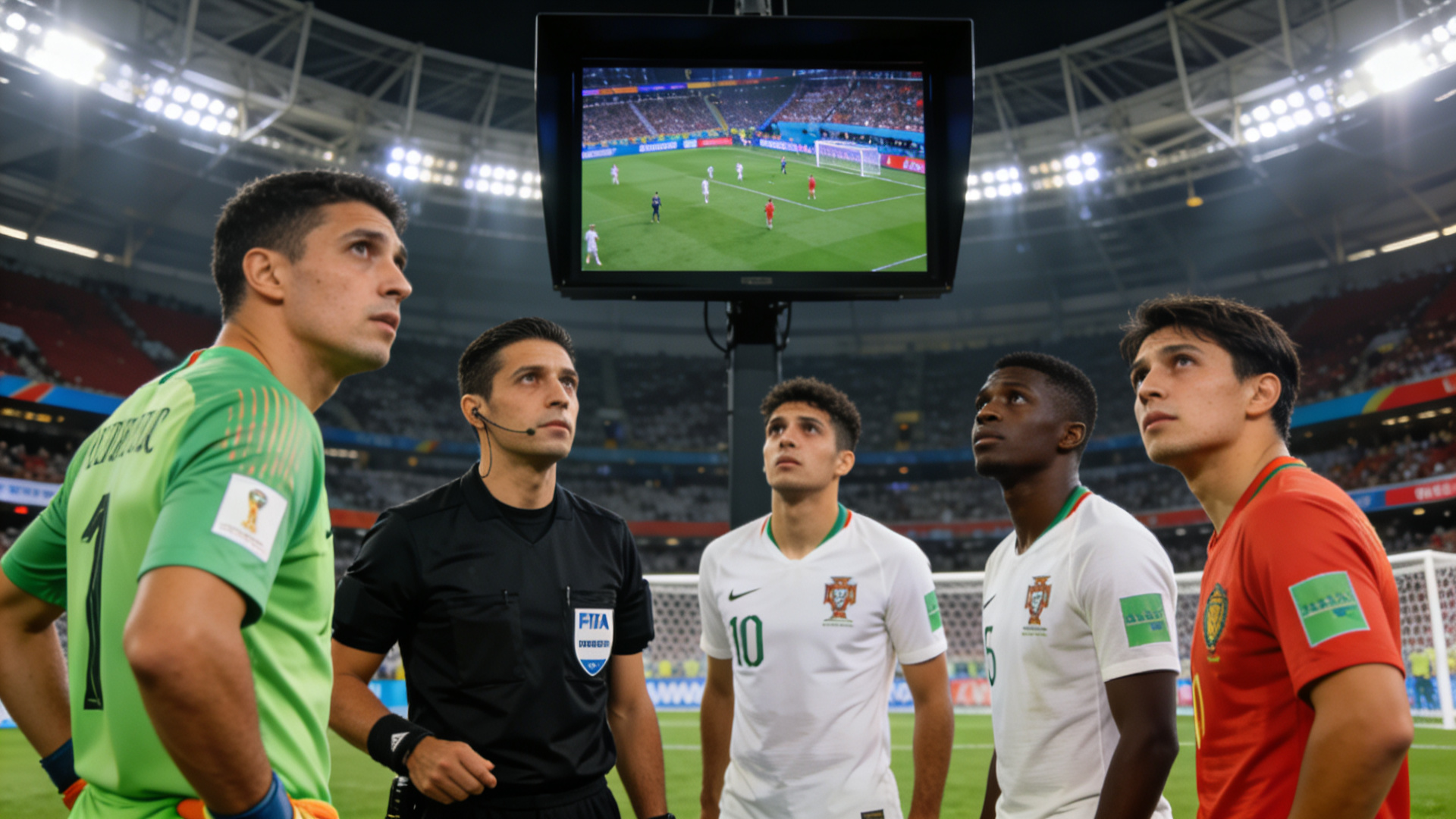
Before VAR, referees made mistakes, but the game never stopped. Now, matches frequently pause for 90‑second checks, disrupting rhythm and creating nervous tension. Fans in stadiums often lack clear information, leading to confusion. FIFA’s push for faster technology (like SAOT) aims to restore flow, but the trade‑off between accuracy and continuity remains a core tension.
Instant euphoria has been replaced by cautious joy. Goals are now followed by glances toward the referee, who often has a finger to his earpiece. Players have learned to delay full‑throated celebrations until the VAR check is complete—a change that some argue robs the game of its raw emotional release.
VAR has turned handball decisions into a labyrinth of interpretation. The 2022 tournament saw penalties awarded for arms deemed to be in “unnatural positions,” even when the contact was unintentional. The inconsistency across matches frustrated players and fans alike, prompting FIFA to later refine the handball rule for club competitions.
One positive effect has been a reduction in blatant diving. Players know that VAR can catch simulation, especially in the penalty area. However, crafty players have adapted, learning to “win” contact rather than create it out of nothing.
VAR has shifted the power dynamic. On‑field referees are no longer the ultimate authority—they are one part of a team. In 2018, referees were often reluctant to use the pitchside monitor. By 2022, they were regularly reviewing their own decisions. This collaboration has improved accuracy but also exposed referees to greater public scrutiny.
Despite technological advances, VAR remains deeply divisive.
Subjectivity: While offside is now essentially objective (via SAOT), handball and foul decisions remain subjective. Two VAR officials might interpret the same incident differently, leading to accusations of inconsistency.
Transparency: FIFA does not broadcast the audio between referees and VAR, unlike in rugby or cricket. This lack of transparency fuels suspicion among fans.
The “Clear and Obvious” Paradox: In practice, many VAR interventions are for incidents that are not “clear and obvious” but rather marginal—leading to what critics call “re‑refereeing” the game.
For the 2026 World Cup, FIFA plans to build on the 2022 model with further refinements:
Full integration of SAOT: Semi‑automated offside will be used in all venues, and FIFA is exploring expanding it to offside calls in the build‑up to goals.
Referee audio in stadiums? Following successful trials in the Women’s World Cup and some domestic leagues, FIFA may allow referees to announce VAR decisions to the crowd, similar to the NFL. This would increase transparency and reduce confusion.
Faster decisions: FIFA aims to reduce average VAR check times even further, targeting under 20 seconds for offside and under 60 seconds for penalty reviews.
AI assistance: Future iterations could use AI to automatically flag potential fouls or handballs to the VAR hub, reducing human error and speeding up the process.
The answer depends on who you ask.
For purists, VAR has sanitized the game, stripping it of spontaneity and replacing human error with sterile technological interventions. For those who prioritize fairness, VAR has delivered a more just tournament—one where fewer matches are decided by missed calls.
What’s undeniable is that VAR has changed the way the World Cup is discussed. In 2010, we still talk about Frank Lampard’s disallowed goal against Germany. In 2022, we talk about millimeter offside calls and handball interpretations—but we rarely talk about game‑changing errors that went uncorrected.
Perhaps that’s the ultimate legacy of VAR: it has moved the conversation from “the referee got it wrong” to “was that intervention worth the wait?”
The World Cup is the world’s most watched sporting event, and every decision is magnified a thousandfold. VAR was introduced to protect the integrity of the tournament, and by many metrics it has succeeded. Key match decisions are more accurate, and blatant injustices have been eliminated.
Yet the soul of soccer has always been its flow, its raw emotion, and its human drama. VAR has injected a layer of technology that sometimes feels at odds with those qualities. As we look toward the 2026 World Cup in North America, the challenge for FIFA will be to continue refining the system—making it faster, more transparent, and less intrusive—so that the conversation can return to the players and the moments they create.
Because in the end, no technology can ever replace the magic of a World Cup goal. It can only decide whether it counts.
What’s your take on VAR? Does it improve the World Cup or ruin the flow? Share your thoughts below.
Comment